
The History of Peptides: From Scientific Discovery to Modern Skincare
Peptides have more than a century of scientific research behind them.
These molecules have helped scientists understand how the body communicates, how cells respond to signals, and how molecular structure influences biological activity.
Over time, researchers developed ways to identify, reproduce, and modify peptide sequences. Those advances contributed to progress in medicine, biotechnology, and cosmetic ingredient development.
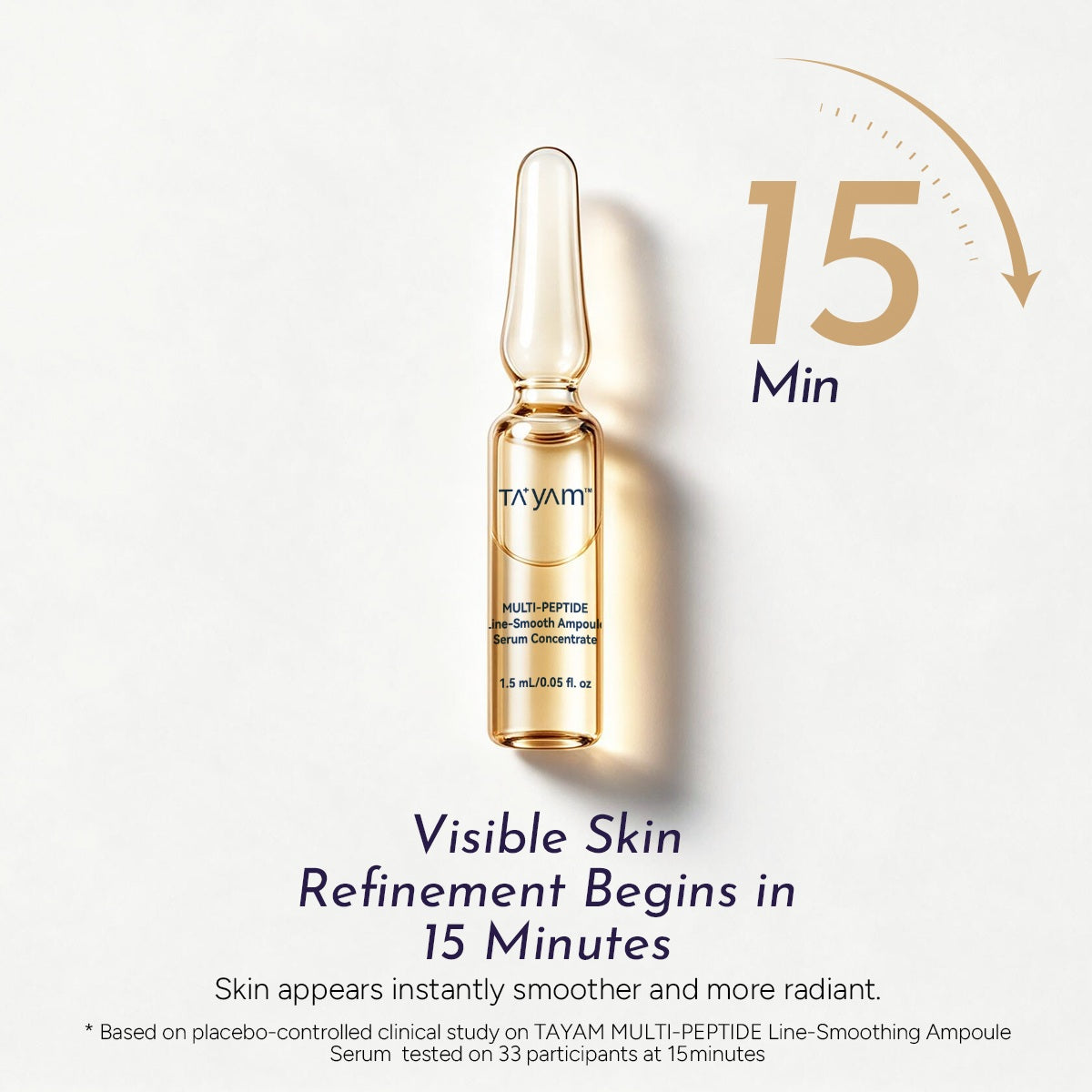
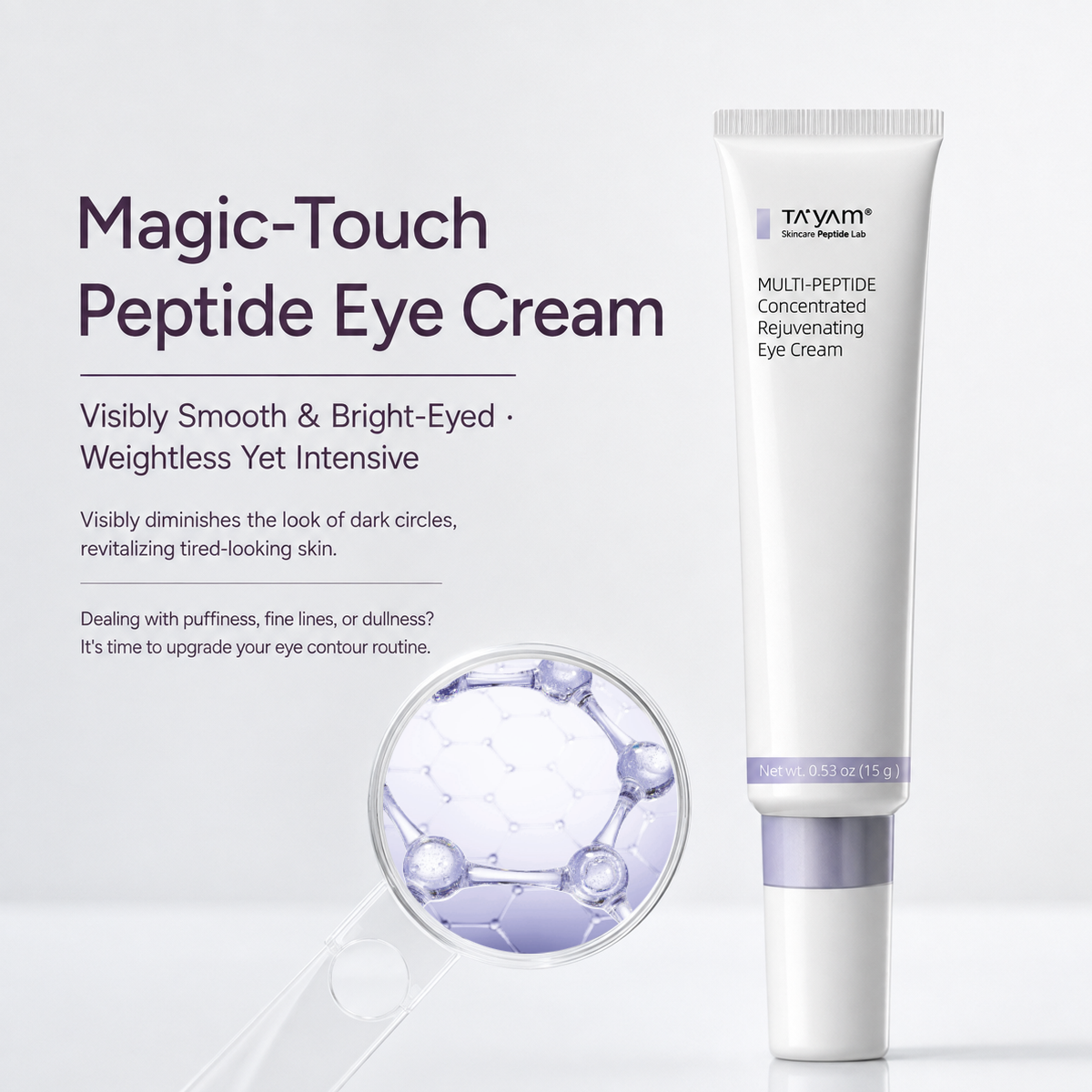
Today, selected peptides are used in skincare formulas targeting the appearance of fine lines, firmness, and uneven texture. But how did they become such a familiar ingredient category?
Three Major Developments in Peptide Science
The history of peptides can be understood through three overlapping developments:
-
Biological discovery: identifying naturally occurring peptides and investigating their functions.
-
Chemical synthesis: determining peptide structures and reproducing them in the laboratory.
-
Biotechnology and molecular design: developing production methods and screening sequences for specific properties.
These developments continue alongside one another. Discoveries about natural peptides still inform how researchers design and manufacture new ingredients.
Early Discovery: Peptides as Biological Messengers
Secretin and Chemical Communication
An important milestone came in 1902, when William Bayliss and Ernest Starling identified a substance from the intestine that stimulated pancreatic secretion.
They named it secretin.
Their research helped demonstrate that chemical substances carried through the bloodstream could influence activity in another organ. This expanded scientific understanding of communication within the body beyond nervous signaling.
Secretin is now known to be a peptide hormone, although its biological activity was identified long before its complete molecular structure was understood.
Understanding the Role of Peptide Hormones
As scientists identified additional peptide hormones, they gained a clearer understanding of how particular molecules participate in biological regulation.
These discoveries encouraged researchers to investigate the relationship between a peptide’s structure and its function.
The next challenge was to determine how these molecules were assembled—and whether they could be reproduced.
Chemical Synthesis: Learning to Build Peptides
The Synthesis of Oxytocin
In 1953, Vincent du Vigneaud and his colleagues synthesized oxytocin, achieving a landmark in peptide chemistry.
Their work demonstrated that a biologically active peptide hormone could be assembled in the laboratory.
This opened new possibilities for studying peptide structures, comparing related sequences, and investigating how molecular changes influence activity.
Decoding Amino Acid Sequences
Research into molecules such as insulin helped establish that proteins and peptides contain defined amino acid sequences.
Understanding those sequences gave scientists a foundation for reproducing molecules and exploring the role of individual structural features.
Peptide research increasingly connected three questions: what is the sequence, how is it arranged, and what does it do?
Solid-Phase Peptide Synthesis
Bruce Merrifield’s development of solid-phase peptide synthesis, or SPPS, made peptide assembly more practical and easier to automate. His work on solid-matrix synthesis earned the Nobel Prize in Chemistry in 1984.
In this method, a growing peptide chain remains attached to a solid support while amino acids are added through repeated reaction cycles.
SPPS became an important tool in peptide research and manufacturing, including the production of many short cosmetic peptides.
Biotechnology and Molecular Design
Producing Peptides Through Biological Systems
Biotechnology introduced additional ways to manufacture peptides and proteins.
Recombinant methods allow researchers to provide a host organism with genetic instructions for producing a target sequence. The resulting material is then recovered, processed, purified, and tested.
These methods expanded the range of molecules researchers could produce and study.
Screening for Specific Properties
Technologies such as phage display allow researchers to investigate collections of sequences and identify candidates with particular binding properties.
Computational methods also help scientists explore molecular structures and select candidates for experimental testing.
Together, these approaches support more focused development. A promising simulation or laboratory finding still needs further evaluation for its intended application.
How Peptide Science Influenced Modern Skincare
As research revealed the activities of particular peptide sequences, cosmetic scientists began exploring their potential in topical formulations.
Copper Peptides and Skin Research
Copper Tripeptide-1, also known as GHK-Cu, became an important subject in skin-related peptide research.
Croda’s historical timeline highlights a 1988 study reporting increased collagen synthesis in fibroblast cultures exposed to this copper-peptide complex. This laboratory result helped inform further research; it does not establish the performance of every copper-peptide product. Croda peptide timeline
The Development of Cosmetic Peptide Ingredients
Researchers also explored chemical modifications to change peptide properties and improve their suitability for cosmetic formulations.
Croda records the introduction of its palmitoylated Biopeptide CL and Biopeptide EL ingredients in 1992, followed by the original Matrixyl® ingredient in 2000. These developments helped establish peptides as a recognizable skincare ingredient category. Croda peptide timeline
Peptides in Modern Skincare Formulas
Selected peptides now appear in products designed to support:
-
The appearance of firmness and elasticity
-
Less noticeable fine lines
-
Smoother-looking skin texture
-
Skin conditioning and hydration
The intended benefits depend on the specific peptide and the complete formulation.
Why Does Peptide History Matter?
Peptide history helps explain how biological discoveries become the starting point for ingredient development.
It also shows why molecular identification, controlled manufacturing, and testing matter. Understanding an ingredient requires more than knowing that it belongs to a scientifically established category.
A long research history provides context, but evidence for an individual peptide and finished product remains necessary when assessing cosmetic claims.
Frequently Asked Questions About Peptide Science
Are Skincare Peptides the Same as Peptide Drugs?
Peptides are a broad category of molecules. Peptide drugs are specific pharmaceutical products developed and tested for medical purposes.
Skincare products may use different peptides, concentrations, formulations, and delivery methods. Results from a peptide medicine cannot be assumed to apply to a cosmetic product.
How Are Skincare Peptides Produced?
Common methods include chemical synthesis, processing natural proteins into smaller fragments, and biotechnology.
The appropriate method depends on the target ingredient and manufacturing requirements.
Why Are Peptides Used in Skincare?
Different peptides have different properties, allowing formulators to select ingredients for particular cosmetic goals.
Some are used in products targeting fine-line appearance and firmness, while others contribute to conditioning or moisturizing formulas.
Are Peptides a New Skincare Ingredient?
No. Cosmetic peptides have been developed and used for decades, while the broader science behind them extends back more than a century.
From Scientific Discovery to Skincare Innovation
The history of peptides connects discoveries about biological communication with advances in chemistry, production, and formulation.
Each development gave scientists new ways to investigate these molecules and explore their applications.
For skincare, that history provides a foundation for continued research—and a reason to look closely at the specific ingredient, formulation, and evidence behind each product.
Disclaimer: This article is for educational purposes only and does not provide medical advice or guarantee skincare results. Cosmetic benefits refer to skin appearance or conditioning. Individual results vary depending on skin type, product formulation, and usage.